Medical Tattoo Removal for MRI, Surgery, and Diagnostics
Published on: October 11, 2026 | Last Updated: October 12, 2026
Written By: Ashita no Joe
Have you been told your tattoo needs to come off before a crucial medical scan or operation? It’s a stressful surprise that can make an already difficult situation feel more complicated.
This guide explains exactly why this happens and walks you through your removal options. We will cover why tattoos can interfere with MRIs, how they impact surgical sites, and the safe, effective methods for temporary or permanent removal to ensure your medical care proceeds without a hitch.
Why Tattoo Removal is Critical for Medical Safety
Tattoo pigment is not inert in your body; it can actively interact with sophisticated medical equipment. The inks, particularly older or certain colored ones, contain metallic compounds that medical devices can misinterpret or react to. I’ve seen clients rush removal after learning their body art could compromise a lifesaving scan or complicate a necessary surgery.
Common medical scenarios that often require tattoo modification or removal include:
- MRI Compatibility: Magnetic Resonance Imaging uses powerful magnets that can interact with metallic tattoo particles.
- Surgical Site Preparation: Tattoos directly over an incision site can harbor bacteria and obscure anatomical landmarks for the surgeon.
- Diagnostic Clarity: Dense tattoos can cast shadows or create artifacts on ultrasound, X-ray, and other imaging, masking underlying issues.
Real-world interference is not just theoretical. In my own practice, a client with a large back piece needed an emergency spinal MRI. The scan had to be halted because the tattoo, containing iron oxide, began heating up significantly, causing them pain and ruining the image quality. Another client’s abdominal tattoo obscured the view during a crucial ultrasound, delaying a diagnosis. These are not rare events; radiologists and surgeons encounter them regularly.
How Tattoos Create Risks During MRI Scans
The core danger lies in the MRI’s powerful magnetic field, which can induce electrical currents in conductive materials-including metallic tattoo pigments. This isn’t a mild discomfort; it’s a genuine safety hazard. The primary risks are localized heating, which can lead to first or second-degree burns, and image distortion called artifacts that render the scan useless.
The level of risk depends heavily on two factors: tattoo location and ink composition. A tattoo directly over the area being scanned, like a chest piece during a heart MRI, poses the highest risk. Inks with high metal content—especially black, red, and some white inks that may contain iron, titanium, or aluminum—are the most reactive. Modern organic pigments are generally safer, but you often don’t know what’s in your skin. These same factors matter when considering tattoo removal, where laser safety risks—burns, blistering, and unwanted pigment changes—vary with ink composition and location. Being aware of what’s in your ink helps you evaluate potential dangers before any removal procedure.
Before any MRI, you must provide your radiologist with a complete checklist of information. Be proactive and report these details:
- The location, size, and age of all tattoos.
- Any known information about the ink brands or colors used.
- Any sensation of warmth, tingling, or itching you’ve ever felt in the tattoo during previous scans or even in the sun.
- If you have permanent makeup, such as eyeliner or lip blush.
This checklist is your first line of defense; withholding this information can lead to a painful, failed procedure. I always advise clients facing a necessary MRI to consult with their doctor and a removal specialist simultaneously to assess the safest path forward.
Tattoo Removal Before Surgery: Timing and Considerations

Planning your tattoo removal around a scheduled surgery requires a strict timeline. The method you choose dictates how far in advance you must start the process. Ask your clinician for the exact start date based on your surgery. They’ll tailor the timeline to the removal method and your healing needs.
Optimal Tattoo-to-Surgery Timing by Removal Method
- Laser Removal: Start 6-12 months pre-surgery. You need 8-12 weeks of full skin healing after your final session before going under the knife.
- Surgical Excision: A single procedure, but schedule it 3-6 months beforehand. This gives the incision line time to mature and strengthen.
- Emergency Surgery: If your operation is urgent, inform your surgical team about your tattoo. They will work around it.
Infection Risks and Anesthesia Near Tattooed Skin
Fresh tattoos and recent laser treatments are open wounds. Anesthesiologists often avoid placing regional nerve blocks or epidurals through tattooed skin due to the theoretical risk of pushing pigment and bacteria deeper. I’ve seen surgeons alter their anesthesia plan for a patient with a large lower back piece. An active infection near the surgical site can lead to a postponed procedure. That caution also applies to anesthesia for tattoo removal procedures, where skin integrity and pigment presence can influence pain control choices. Clinicians may favor approaches that minimize tissue disruption while ensuring safe, effective anesthesia.
Surgical Planning and Incision Lines
Surgeons map their incisions with precision. A tattoo directly in the path of a necessary incision complicates their roadmap. The ink can obscure visual landmarks on the skin’s surface. It can also make it more difficult to align tissue layers properly during closure. For procedures like C-sections or knee replacements, a tattoo in the area forces the surgeon to either cut through it or find a less ideal, sometimes more difficult, surgical path. Some patients opt for tattoo removal for cosmetic procedures to clear the area for future cosmetic procedures, while others discuss alternative cosmetic options to minimize disruption of incision lines.
The Laser Tattoo Removal Process for Medical Preparation
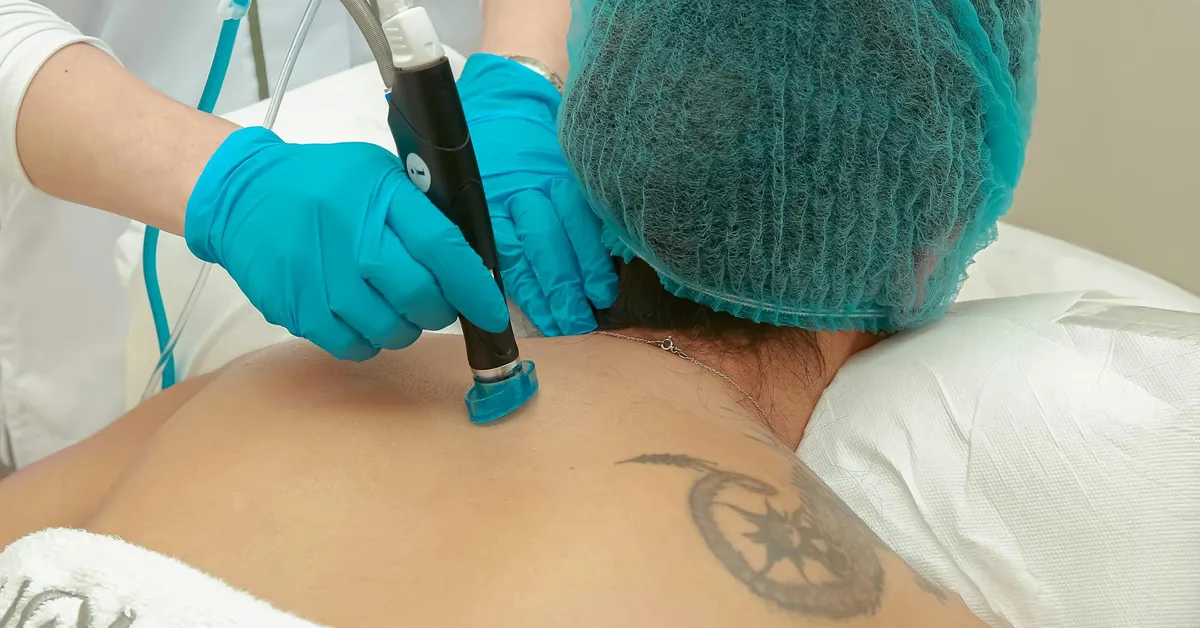
Laser removal is the most common method for clearing skin for medical procedures. The goal is to shatter the ink particles so your body’s immune system can gradually flush them away. It’s a scientific process that ensures effective fading.
Breaking Down Pigment with Q-Switched Lasers
Think of a Q-switched laser as a microscopic hammer that strikes with immense speed. It delivers light energy in billionth-of-a-second pulses, which the ink particles absorb, heat up, and explosively fragment. Different wavelengths target specific ink colors. Black ink absorbs all light spectra and is the easiest to remove. I use this technology daily, watching dark tattoos gradually lighten into faint ghosts over several sessions.
Session Count and Timeline for Medical Clearance
- Most medical facilities require the skin to be clear of raised, inflamed, or freshly treated tattooed areas.
- For a lightening effect, you might need 2-4 sessions spaced 6-8 weeks apart.
- For full removal, expect 8-12 sessions or more.
- Factor in a minimum of 2-3 months of zero laser treatments before your surgery date for complete cellular recovery.
Essential Pre-Removal Steps
- Medical Consultation: Your first stop. Bring your surgeon’s requirements. We need to know the timeline and the specific area of concern.
- Patch Test: I always test a small, hidden spot of the tattoo. This checks for adverse reactions and sets the correct laser energy level for your skin.
- Pigment Analysis: I examine the ink’s colors, depth, and density. This determines the laser settings and predicts how your body will respond.
Managing Diagnostic Imaging Interference from Tattoos
Your tattoos can literally get in the way of seeing what is happening inside your body. Metallic compounds in some tattoo pigments are the primary culprits behind distorted medical images.
How Tattoos Create Shadows and Distortions
During an MRI, the powerful magnet can interact with metallic particles in tattoo ink. This interaction can cause a phenomenon called “artifact,” which appears as shadows, blurring, or false bright spots on the scan. It can obscure the very tissues the radiologist needs to examine. I recall a client whose shoulder tattoo created a persistent shadow that made diagnosing a potential rotator cuff tear incredibly difficult.
Strategies for Mitigating Imaging Artifacts
- Complete Removal: The most effective solution. It eliminates the source of the interference entirely.
- Partial Removal: A strategic approach. We can target just the section of the tattoo that lies over the specific organ or area being imaged.
- Imaging Workarounds: Radiologists can sometimes adjust machine settings or reposition you to minimize the artifact, but this is not always successful.
Diagnostic Method Sensitivity to Tattoo Interference
Not all scans are affected equally.
- MRI (Magnetic Resonance Imaging): Highest risk. The strong magnet can also cause a burning sensation on old, dense tattoos.
- CT (Computed Tomography) Scans: Moderate risk. Metallic ink can create streak-like artifacts that degrade image quality.
- Ultrasound: Lower risk. The sound waves can be slightly scattered by the ink, but it rarely prevents a diagnosis.
- X-Rays: Minimal risk. Standard X-rays generally pass through tattoo pigment without significant issue.
Practical Patient Guide: From Consultation to Procedure
When you walk into a consultation for medical-motivated removal, the conversation is fundamentally different. I always start by requiring a letter from your physician or surgeon that explicitly states the medical necessity for the tattoo’s removal. This isn’t a bureaucratic hurdle; it’s our roadmap. It tells me the precise location, the required level of clearance, and the timeline we’re working against. For readers of a tattoo removal clinic guide, that roadmap is a prime example of how to prepare for a consult. It also signals what questions to ask and what documents to gather to compare options across clinics.
The Counseling Process
The counseling process for these cases is intensely collaborative. We discuss three core pillars:
- Medical Imperative: We review your doctor’s notes to understand why the tattoo is a problem. Is it for an MRI? A skin graft donor site? This dictates our strategy.
- Realistic Timelines: We map out a treatment schedule that aligns with your medical procedure date. This is non-negotiable and often accelerated.
- Outcome Expectations: We’re not always aiming for perfect, invisible skin. The goal is to make the area safe for your medical team to work.
Healing Timeline Expectations
This is where many patients get anxious. The skin needs time to recover fully from a laser session before you can undergo surgery or other procedures.
- The Absolute Minimum: You need at least 4-6 weeks of healing after your final laser session. Your skin must be completely settled, with no redness, swelling, or scabbing.
- Ideal Window: I advise planning for 8-12 weeks between your last removal appointment and your medical procedure. This gives your immune system time to process the shattered ink particles and for the skin’s integrity to fully restore.
- Rushing is Risky: Proceeding with surgery on recently lasered skin can lead to poor wound healing, increased infection risk, and unpredictable scarring. Your surgeon will thank you for giving them a clean, stable canvas.
Cosmetic Concerns and Scar Prevention
It’s completely valid to worry about what your skin will look like afterward. Your focus is on health, but I’m also focusing on your long-term skin appearance.
- Laser Selection is Key: I often use a pico-second laser for these cases. Its ultra-short pulses shatter ink more efficiently with less thermal damage to the surrounding skin, which significantly reduces scarring risk.
- Aftercare is Your New Religion: Meticulous aftercare is non-negotiable. This means keeping the area clean, applying the prescribed ointments, and religiously using high-SPF sunscreen. The sun is your skin’s enemy during this process.
- Proactive Scar Management: Once fully healed, I recommend silicone gel sheets. I’ve used them myself on a removal site with great success. They help flatten and soften any raised tissue, making the area less noticeable.
Risks and Realistic Outcomes of Medically Necessary Tattoo Removal
Laser tattoo removal is a medical procedure, and like any procedure, it carries potential complications. Being aware of them empowers you to make the best decision. In some cases, laser removal can help address tattoo-related pigmentation issues, though outcomes vary.
Potential Complications
- Pigment Oxidation: This is a tricky one. Some tattoo inks, especially reds and flesh tones containing iron oxide, can turn dark (black or brown) when treated with a laser. This is a chemical reaction and can be very difficult to reverse.
- Skin Sensitivity: The treated area can become hypersensitive or, conversely, experience temporary numbness. This usually resolves but can be unsettling.
- Incomplete Removal: Despite our best efforts, 100% clearance is not always possible. Certain ink colors (like neon greens and blues) are notoriously stubborn. Our goal is to remove enough pigment to eliminate the medical interference, not necessarily to achieve perfection.
Risks: Removal vs. Proceeding with a Tattoo
This is the critical risk-benefit analysis you and your doctor must perform.
- Risk of Removal: The primary risks are scarring, hypopigmentation (lightening of the skin), and the general complications listed above.
- Risk of Proceeding with the Tattoo: This is often far more dangerous. For an MRI, the tattoo can cause localized burning, swelling, and image distortion that masks critical diagnostics. For surgery, a tattoo in the incision path can introduce pigment into deeper tissues, complicate wound closure, and obscure anatomical landmarks.
- The Verdict: In nearly every medically necessary case I’ve handled, the transient risks of removal are vastly preferable to the potential for permanent harm or diagnostic failure caused by leaving the tattoo in place.
Realistic Clearance Levels for Medical Scenarios
Not every medical situation requires the tattoo to be completely gone. The required clearance level is specific to the procedure. In a guide to partial tattoo removal, we discuss options to fade or remove only the selected areas while leaving others intact. This helps you tailor results to your needs while considering safety, costs, and recovery.
- For MRI and Diagnostics: We need to remove enough metallic-based ink to prevent heating and artifact. This often means significant lightening, but not necessarily full eradication. The radiologist’s report guides our target.
- For Surgical Incision Sites: The tattoo must be removed to the point where the pigment will not be dragged into the surgical wound. This typically requires a very high degree of clearance, making the underlying skin clearly visible to the surgeon.
- For Radiation Therapy: The treatment field must be absolutely clear of any pigment that could alter the dose distribution or cause a skin reaction. This demands the most aggressive removal approach.
Frequently Asked Questions
How does the laser tattoo removal procedure work?
During a laser tattoo removal session, a specialist uses a device that emits concentrated light pulses targeted at the ink particles in the skin; this energy causes the pigment to fragment into tiny pieces, which are then naturally flushed out by the body’s immune system over time.
What can help improve the effectiveness of tattoo removal?
Factors like proper aftercare-such as keeping the treated area clean, moisturized, and protected from sun exposure-can aid the process, along with staying hydrated and avoiding smoking, as these support the body’s ability to heal and eliminate ink particles more efficiently.
Why might tattoo removal be necessary before an MRI?
Tattoo removal may be required before an MRI because certain inks contain metallic elements that can react to the magnetic fields, leading to potential complications like localized burns or image distortions that interfere with accurate diagnostic results.
Closing Words
When a medical procedure demands it, tattoo removal is a responsible step for your health and safety. Always consult directly with your surgeon or radiologist to determine if your specific ink truly needs to be erased before a scan or operation. This ensures the medical team has a clear field and you avoid any potential complications.
Professional laser removal remains the gold standard for this task, offering the precision and control required. Prioritize a consultation with a certified removal specialist who can create a safe, effective treatment plan tailored to your medical timeline. In tattoo removal clinics, laser safety protocols are strictly followed to protect patients and staff. This includes protective eyewear, skin assessments, and precise device calibration. Your health is the ultimate priority, and proper removal is a key part of that process.
Further Reading & Sources
- Can You Get an MRI With a Tattoo? – Health Images
- Unveiling the Temporal Aspect of MRI Tattoo Reactions: A Prospective Evaluation of a Newly-Acquired Tattoo with Multiple MRI Scans – PMC
Ink Fade Lab is your trusted source for tattoo removal insights, combining expert knowledge with compassionate care to help you make informed decisions about your tattoo journey. Based on years of experience in the tattoo removal industry, we are dedicated to providing accurate, up-to-date information to support your choices.
Risks & Safety