
The Real Journey of Tattoo Removal: What to Expect
Published on: February 19, 2026 | Last Updated: February 19, 2026
Written By: Ashita no Joe
Are you staring at a tattoo that no longer fits your life, wondering if it can truly be erased? I’ve been there, both in my own skin and with countless clients sitting in my chair, and I know that uncertainty can feel overwhelming. This guide will walk you through the entire progression of tattoo removal, from the first laser pulse to the final faded memory, so you can move forward with confidence.
We will cover the stages your skin and ink will go through after each session, explain why your specific tattoo’s age, colors, and location dramatically affect your timeline, and give you practical, professional advice for navigating the entire process safely and effectively.
The Core Process: How Lasers Break Down Ink
Think of tattoo ink as a stubborn stain trapped deep within your skin. The laser’s job is to shatter that stain into microscopic dust, small enough for your body’s clean-up crew to finally carry it away. I’ve watched this happen countless times under the microscope, and it’s a powerful process to witness firsthand.
The Science of Ink Particle Fragmentation
Your immune system is designed to attack foreign invaders, but it can’t handle large, solid ink particles. A laser fires an incredibly intense, ultra-fast pulse of light that passes harmlessly through your skin. This light energy is absorbed by the ink pigment, creating a rapid thermal expansion. This absorption creates a shockwave that literally blows the ink particles apart from the inside out. The particles fracture into tiny fragments that your white blood cells can now recognize, engulf, and dispose of through your lymphatic system.
The Critical Role of Wavelength Specificity
Not all laser light is the same. Different ink colors absorb different wavelengths of light. Using the wrong wavelength is ineffective and can burn the skin.
- 1064nm (Nd:YAG Laser): This is my workhorse for black and dark blue ink. It’s a longer wavelength that penetrates deeply into the dermis, making it highly effective on darker pigments and safer on darker skin tones.
- 532nm (Frequency-Doubled Nd:YAG): This laser targets red, orange, and some yellow inks. It’s a shorter wavelength, perfect for these brighter colors that absorb light differently than black.
- 755nm (Alexandrite Laser): This wavelength is excellent for targeting green, blue, and some black inks. I often find it provides great clearance on a wide range of colors.
Choosing the correct laser wavelength is the single most important factor for effective and safe tattoo removal. It’s not a one-laser-fits-all situation.
Comparing Laser Pulse Durations
The speed of the laser pulse is just as important as its color. We measure this in nanoseconds and picoseconds-that’s billionths and trillionths of a second.
- Q-Switched (Nanosecond) Lasers: These were the original gold standard. They fire pulses in the nanosecond range, creating a strong photoacoustic effect to break up ink. They work well, especially on amateur tattoos.
- Picosecond Lasers: This is the newer technology I prefer. These lasers fire pulses that are up to 100 times faster. The extreme speed creates a more efficient photomechanical shock, shattering ink into even finer particles with less residual heat. This often leads to fewer treatment sessions overall.
In my experience, picosecond lasers generally offer better results on stubborn, professional tattoos and multicolored ink. Choosing the best laser for removal (pico vs. q-switched) usually comes down to tattoo characteristics and your goals. For many, pico lasers offer faster clearance and fewer sessions, while q-switched lasers still have a strong track record on certain colors and skin types.
Understanding Laser Efficacy
Laser efficacy isn’t just about the machine; it’s about the entire system. A powerful laser is useless in untrained hands. True efficacy comes from the correct combination of wavelength, pulse duration, fluence (energy level), and spot size, all expertly applied by a skilled technician. High efficacy means achieving maximum ink clearance with the minimal number of sessions and the lowest risk of side effects like hypopigmentation or scarring. This is an art as much as a science.
What to Expect in the First 48 Hours After a Session
The immediate aftermath of a laser session tells you a lot about how the process is working. Your body is launching its inflammatory response, which is a necessary part of the healing cycle. How you care for your skin in these first two days sets the stage for the entire healing and fading process. I’ve been through this myself on my own tattoos, and the discipline pays off.
Immediate Physical Reactions
Right after the laser pulse, you will see and feel some very specific things. This is normal.
- Frosting: The treated area will turn a chalky white. This is a temporary reaction caused by the rapid release of gas and water vapor from the shattered ink particles. It typically fades within 30 minutes.
- Swelling and Redness: The area will become swollen, red, and tender, much like a bad sunburn. This is your body sending blood and lymph fluid to the area to begin the cleanup process.
- Pinpoint Bleeding or Weeping: Some minor pinpoint bleeding or clear fluid weeping is common. The skin’s surface has been traumatized.
Your 48-Hour Healing Timeline
Follow this timeline closely for the best results. I give this same sheet to all my clients.
- Hour 0 (Immediately After): The technician will apply a thick ointment and a sterile, non-stick bandage. Leave this bandage on for the first few hours.
- Hours 1-4: Frosting subsides. Swelling and redness increase. You may feel a throbbing sensation. Take an over-the-counter anti-inflammatory if needed.
- Hours 4-6: Gently remove the bandage. Wash the area with lukewarm water and a mild, fragrance-free soap. Pat dry with a clean paper towel-do not rub.
- Hours 6-48: Apply a thin layer of recommended ointment (like Aquaphor) 2-3 times daily. Keep the area clean, dry, and uncovered as much as possible to let it breathe. Swelling should peak around 24 hours and then gradually start to subside.
Proper Immediate Aftercare
Your aftercare routine is non-negotiable. It directly supports your body’s ability to remove the fragmented ink.
- Wash the area gently twice daily.
- Apply a thin layer of ointment to keep it moisturized-a thick layer can trap bacteria.
- Wear loose, clean clothing over the area.
- Sleep on clean sheets.
- Drink plenty of water to help flush your lymphatic system.
Neglecting aftercare is the fastest way to derail your progress and risk complications.
A Strict Warning Against Picking or Scratching
As the area heals, it will begin to itch. This is a sign of healing, but it is a test of your willpower. Under no circumstances should you pick, scratch, or peel the treated skin. I’ve seen clients create scars and infections by giving in to the itch. You are disrupting the very delicate process of ink phagocytosis. If the itching is unbearable, gently tap the area or apply an ice pack over a clean cloth. Let any scabs or blisters fall off naturally. Your future, clear skin will thank you.
The Visual Progression: From Session to Session

After your first laser session, the tattoo won’t just vanish. The initial changes are subtle but set the stage for everything to come. You’ll notice the ink looks slightly faded and “frosted” with a white color immediately after treatment—this is a normal reaction called epidermal debris. Many wonder what it actually feels like during treatment. For many, it’s a brief, tolerable sting—often described as a rubber-band snap—while others feel only warmth.
After the First Treatment
Within hours, the area may redden and swell. In the days that follow, the treated ink will darken and a crust or scab will form.
This crusting is a critical part of the healing process where your body starts to expel shattered ink particles. Do not pick at it. Let it flake off naturally over 1-2 weeks to prevent scarring and ink retention.
The Lymphatic Clearance Process
Underneath the surface, your body’s lymphatic system is now working hard. The laser breaks ink into tiny fragments, and your white blood cells then carry these particles away to be processed by your liver.
Think of your immune system as a cleanup crew, slowly but steadily hauling away the debris from each session. This is why treatments are spaced 6-8 weeks apart-it gives your body the time it needs to do this vital work.
Typical Progression Through Multiple Sessions
- Session 1-2: You’ll see the first noticeable lightening. The solid lines of your tattoo may begin to break up and look “grainy.” Colors start to mute.
- Session 3-5: Significant fading occurs. Large blocks of ink break apart, and you can see more of your natural skin tone coming through. The tattoo often appears patchy.
- Session 6-8+: The tattoo becomes a faint shadow of its former self. At this stage, what’s left are the most stubborn, deep-set ink particles.
I’ve seen this progression countless times on my own skin and my clients’. The contrast between the slight blurring after session two and the near-complete eradication after eight sessions is dramatic. A tattoo that was once a bold, dark statement can be reduced to a barely-there whisper that’s only visible if you know where to look.
Factors That Directly Impact Your Fading Rate
Not all tattoos fade at the same speed. Your body’s ability to clear ink is a highly individual equation influenced by several key variables. Knowing these helps set realistic expectations from the start. After your first tattoo removal session, don’t expect dramatic results; fading tends to build over multiple sessions. Your clinician can estimate a likely treatment plan based on your tattoo and skin type.
Ink Color Dictates Laser Targeting
Different ink colors absorb different light wavelengths. Modern lasers can be tuned to target specific colors, but some pigments are inherently more stubborn.
Black and dark blue inks absorb the laser’s energy most effectively, making them the easiest and fastest to remove. I always tell my clients with black tattoos they have the best prognosis.
| Ink Color | Ease of Removal | Notes |
|---|---|---|
| Black, Dark Blue | Easiest/Fastest | Highly absorbent; responds predictably. |
| Red, Orange | Moderate | Can be targeted but may require specific laser settings. |
| Green, Yellow, Purple | Most Difficult/Slowest | Reflective pigments are challenging to break down. |
How Your Skin Type Influences Results
Your skin’s melanin content plays a major role. Lighter skin with less melanin provides a higher contrast against the ink, allowing the laser energy to focus precisely on the pigment with less risk to the surrounding skin. On darker skin tones, the laser must be carefully calibrated to avoid affecting the melanin in the skin itself, which can slow the process to ensure safety.
Tattoo Age, Depth, and Location
- Age: Older tattoos, especially those that have been naturally exposed to the sun for years, often have slightly faded, degraded ink that can be easier to break up.
- Depth: Amateur tattoos are often unevenly applied, with some ink placed too superficially and some too deep. Professionally applied ink is consistently placed at the right depth, which paradoxically can make it more predictable and sometimes easier to remove systematically.
- Location: Tattoos on areas with excellent blood circulation (like the chest or torso) typically fade faster because the immune response is more efficient. Ink on extremities like feet and hands, where circulation is poorer, can be much more stubborn.
The Role of Your Individual Immune Response
This is the X-factor. Your body’s unique metabolic and lymphatic system efficiency is the engine driving the entire removal process. A person with a robust immune system who stays hydrated, exercises, and eats well will generally see better, faster clearance of ink particles than someone with a compromised or slower system. I’ve witnessed two people with nearly identical tattoos on the same body part experience vastly different timelines based purely on their overall health.
Attempting DIY removal methods is a dangerous gamble with your skin’s health. They lack the precision of medical-grade lasers and carry a high risk of permanent scarring, infection, and ineffective results that can make future professional removal even more difficult, especially when compared to clinics that follow strict laser safety protocols.
How to Gauge and Measure Your Removal Progress
Tracking your tattoo’s disappearance isn’t about guesswork. You need a systematic approach to truly see the transformation happening over time. I take a photo of my clients’ tattoos before every single session, using the same lighting and angle. This creates an undeniable visual record.
Take Consistent Progression Photos
- Photograph your tattoo in the same room with consistent, bright, indirect light before every treatment.
- Use a plain, neutral-colored background to avoid color casts affecting the image.
- Stand the same distance from the tattoo each time. I recommend a close-up and a shot from a foot away.
- Store these photos in a dedicated album on your phone. Flipping through them is the best motivation.
Recognize Tangible Signs of Successful Fading
Fading doesn’t always mean the entire tattoo gets uniformly lighter at once. Look for the ink breaking apart into a speckled or “frosted” pattern immediately after a session—this is a great sign the laser energy was absorbed. Over the following weeks, watch for these changes in fading.
- The bold, solid lines of your tattoo will start to look fuzzy or pixelated.
- Dark black and navy tones often fade to a muted gray or brownish hue.
- You’ll see more of your natural skin tone peeking through the design.
- The tattoo will feel less raised on your skin as ink particles are flushed away.
Set Realistic Session Expectations
Clients always ask me for a magic number. Complete removal of a professional tattoo typically requires a minimum of 8 to 12 sessions, spaced 6 to 8 weeks apart. Tattoo removal occurs in stages, from initial fading to deeper pigment reduction and eventual clearance. Understanding these tattoo removal stages helps explain why the timeline can vary, as several factors can influence each stage.
- Ink Density: A dense, solid tribal tattoo will take longer than fine line-work.
- Color Palette: Black ink absorbs laser light best. Stubborn colors like green, light blue, and yellow require specialized lasers and more time.
- Your Body: Your immune system and lymphatic health control how quickly it clears the shattered ink particles.
- Tattoo Location: Tattoos on areas with poor circulation, like ankles, fade slower than those on the torso.
Understand Pigment Dispersion Visibility
The most dramatic visual proof of progress often happens after your third or fourth session. The middle stages of removal, between sessions 4 and 8, are when you’ll see the most significant breakdown and lightening. The immune system has already been primed to recognize the ink as a foreign body to remove. You’ve given it a head start, and it begins working more efficiently.
Navigating Potential Setbacks in Your Removal Journey
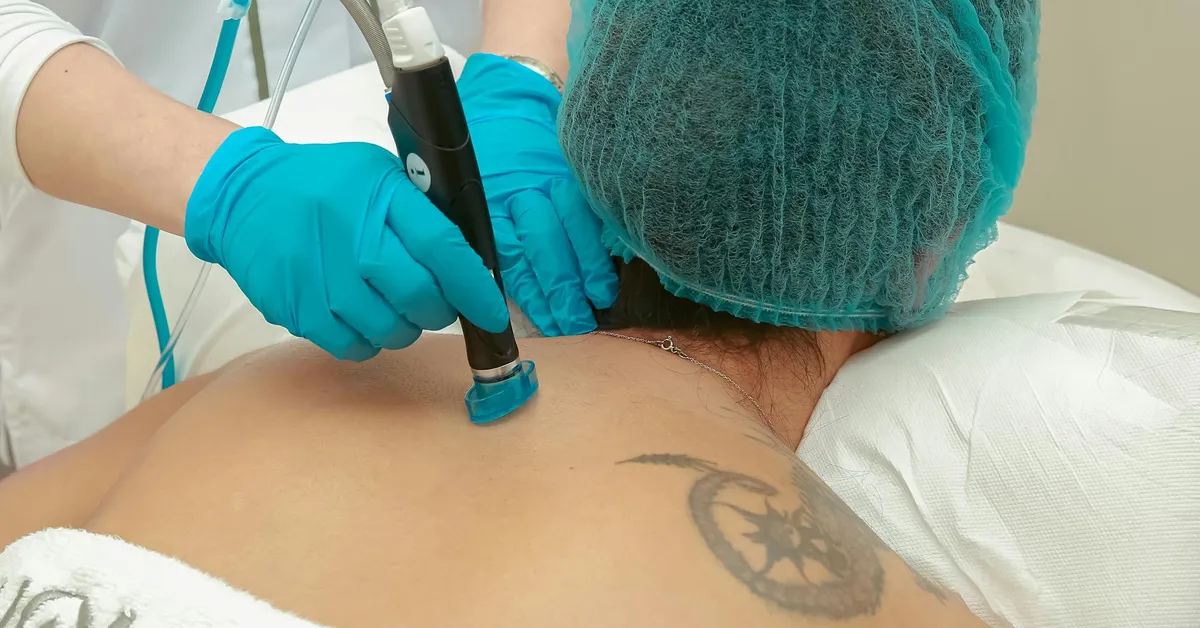
Laser tattoo removal is a controlled injury to your skin. Some side effects are a normal part of the healing process, but others signal a problem that needs immediate attention. I’ve seen both on my own skin and my clients’. Knowing the difference is crucial. Handling blisters safely is part of that knowledge. If blisters form, keep the area clean and dry, avoid popping them, and contact your clinician if they worsen or show signs of infection.
Identify Common Skin Risks
- Hypopigmentation: The laser can temporarily stun the melanocytes in your skin, causing light or white patches. This is more common on darker skin tones.
- Hyperpigmentation: An overproduction of melanin as the skin heals can leave dark brown spots. This often fades over several months.
- Scarring: This results from improper laser settings, poor aftercare, or picking at the healing skin. It presents as textured, raised, or pitted skin.
Normal Side Effects vs. Concerning Signs
Swelling, redness, and blistering are standard inflammatory responses and indicate the laser effectively targeted the ink. These should subside within a week with proper care. You should contact your technician immediately if you experience any of the following.
- Severe, spreading redness coupled with throbbing pain (signs of infection).
- Pus or a foul odor emanating from the treatment area.
- Blisters that are excessively large or painful.
- A fever following your session.
Reinforce the Critical Importance of Professional Aftercare
What you do after you leave the clinic dictates your final result. Treat the treated area like a precious wound, because that is exactly what it is. My personal protocol is non-negotiable.
- Apply a cold pack for 15-minute intervals during the first 24 hours to manage swelling.
- Keep the area clean with mild soap and water, then pat it completely dry.
- Apply a thin layer of antibiotic ointment and cover with a sterile, non-stick bandage for the first few days.
- Once blisters subside, switch to a fragrance-free moisturizer to support healing.
- Wear loose, breathable clothing over the area. Absolutely no sun exposure.
A Strong Caution Against DIY Methods
I have seen the horrific consequences of at-home removal attempts. Salabrasion, acid-based creams, and amateur laser pens cause permanent scars that are far more noticeable and difficult to treat than the original tattoo. These methods cannot differentiate between ink and your living skin cells. They burn and destroy everything. A professional laser is calibrated for a specific wavelength to shatter ink particles with minimal collateral damage. Do not gamble with your skin’s health.
Frequently Asked Questions
How does tattoo removal progression compare to experiences shared on Reddit?
While Reddit communities provide valuable personal stories and support, individual progression can vary significantly due to factors like ink type, skin tone, and aftercare habits. It’s best to use these anecdotes as motivation but rely on professional consultations for accurate, personalized timelines and advice tailored to your specific situation.
What is the average number of sessions needed for complete tattoo removal?
The average ranges from 8 to 12 sessions for full removal, spaced 6 to 8 weeks apart, but this depends on ink density, color, and your immune response. A professional assessment can give you a more precise estimate based on your tattoo’s characteristics and your overall health. It is also important to have realistic expectations and understand the progress of removal session by session.
How has tattoo removal technology advanced in recent years?
Advancements include picosecond lasers, which break down ink more efficiently with fewer sessions and less risk of side effects compared to older nanosecond lasers. Enhanced wavelength specificity also allows for better targeting of stubborn colors, improving overall safety and effectiveness in modern tattoo removal practices.
Closing Words
Your tattoo removal path is a journey of patience, not an overnight fix. Professional laser treatments remain the safest and most effective way to clear your skin, far outperforming any risky DIY alternative. Trust the process and the expertise of a qualified technician. This journey toward complete tattoo removal takes time, but steady progress adds up. Each session moves you closer to the goal of complete tattoo removal.
From my own experience, both giving and receiving treatments, the final result is worth the commitment. Set realistic expectations, follow your aftercare plan diligently, and you will see the ink fade with each session. Your clear skin is on the horizon.
Further Reading & Sources
- Tattoo Removal: How It Works, Process, Healing & Scarring
- What to Expect From Your Tattoo Removal: First Session | Removery
Ink Fade Lab is your trusted source for tattoo removal insights, combining expert knowledge with compassionate care to help you make informed decisions about your tattoo journey. Based on years of experience in the tattoo removal industry, we are dedicated to providing accurate, up-to-date information to support your choices.
Healing Stages