Removing Cover-Up Tattoos: The Double Layer Challenge
Published on: March 31, 2026 | Last Updated: March 31, 2026
Written By: Ashita no Joe
Did your cover-up tattoo fail to conceal the old design, leaving you with a mess of layered ink? I’ve felt that sting myself after removing tattoos from my own skin and countless clients over the years.
This guide cuts through the confusion with straightforward, expert-backed steps for tackling double-layer ink. We will break down why cover-ups are uniquely difficult, compare professional removal options, and outline a realistic timeline for seeing clearer skin.
What Makes Cover-Up Tattoos a Removal Nightmare?
Think of your skin like a single sheet of paper. A normal tattoo is one drawing. A cover-up is two drawings layered on top of each other, with the first one often being darker and more saturated to mask the original mistake. You are not dealing with one layer of ink; you are dealing with a complex ink sandwich embedded in your dermis.
From my years in the studio and removal clinic, I’ve seen why this double layer creates a perfect storm for difficulty.
- Pigment Depth is Inconsistent: The old tattoo ink sits at one depth, while the new cover-up ink is deposited at another, often deeper level. Lasers have to target two distinct planes within the skin.
- Mixed and Dense Colors: Cover-ups frequently use dark blues, blacks, and greens to effectively obscure the old design. This creates a dense, complex pigment cocktail that is stubborn to break down.
- Underlying Scar Tissue: The original tattoo, especially if it was poorly done, often comes with minor scar tissue. The cover-up process adds a second trauma. Laser energy reacts differently with scarred skin, leading to unpredictable fading and potential for further textural changes.
I often get clients asking me, “Is it harder to remove a cover up tattoo?” My answer is always a definitive yes. It’s like trying to clean two different paint spills from a carpet—one that has already dried and settled deep into the fibers, and a fresh one on top. You need different techniques for each. So, when deciding which route is right—removal, cover up, or a combination—we weigh your goals, skin health, and budget. We tailor the plan to you.
How Laser Removal Tackles Double Layer Tattoos
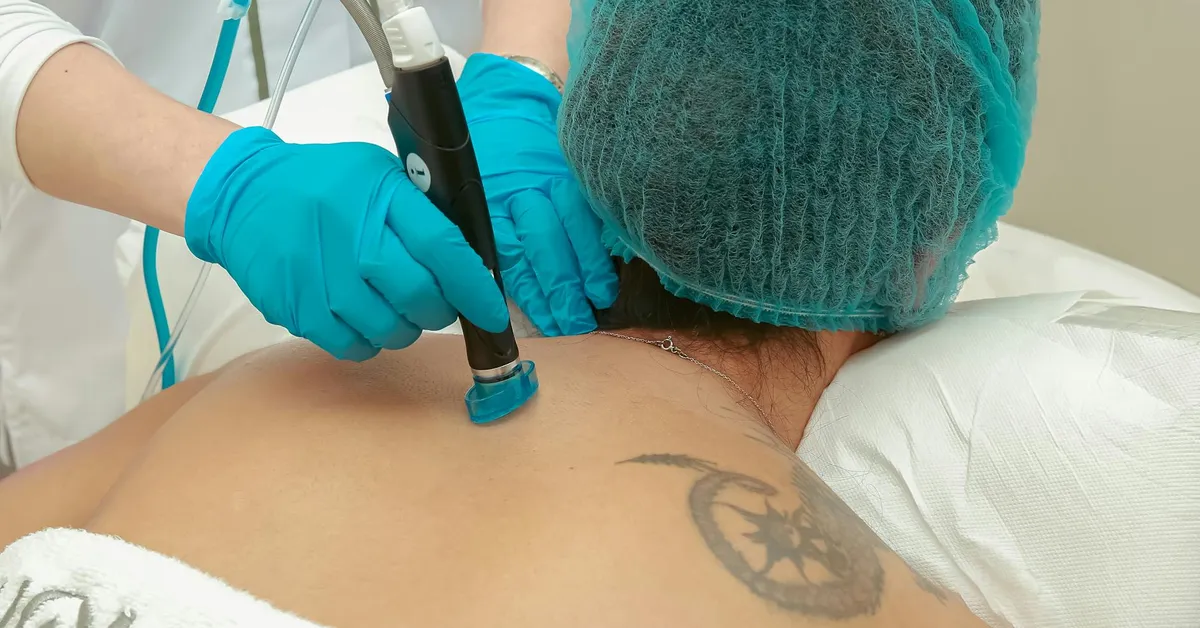
Modern laser technology is our best weapon against this layered challenge, but it requires a skilled hand and the right tools. We aren’t “erasing” the ink; we are shattering it into microscopic particles that your body can then naturally eliminate.
Here’s the breakdown of how we approach it:
- Targeting Different Depths: We use Q-switched lasers, particularly the Nd:YAG, for their versatility. The Nd:YAG is excellent at reaching the deeper dermal layers to attack the old, underlying ink while also being effective on the surface-level cover-up pigments.
- The Fragmentation Process: The laser emits an intense, ultra-short pulse of light that passes harmlessly through the top layer of skin. This light energy is absorbed by the tattoo ink particles, causing them to vibrate violently and fracture. Your immune system’s white blood cells then recognize these tiny fragments as foreign invaders and gradually carry them away to your lymphatic system.
- Adjusting Laser Fluence: For layered tattoos, I meticulously adjust the fluence (energy setting) for each session. We might start with higher fluence to tackle the dense, dark cover-up ink and then adjust as the underlying, often older, colors begin to reveal themselves.
You will notice that some colors fade much slower. In a cover-up, the original tattoo might have had stubborn reds or yellows that were buried under dark blue. As the top layer breaks up, those underlying colors can become visible again, requiring a shift in laser wavelength to address them. Patience is not just a virtue here; it’s a medical necessity for your skin to heal and process the fragmented ink safely between sessions.
Key Factors That Dictate Your Removal Success
Not all cover-up tattoos are created equal when it comes to removal. Your final result hinges on a few critical variables that a skilled technician will evaluate before the laser even touches your skin. I’ve seen cases where a cover-up vanishes surprisingly fast and others that become a long-term project. If your goal is a tattoo 100 percent removed, laser treatment by an experienced technician is the most reliable route. Complete removal also depends on ink color, depth, and skin type.
The Critical Variables
- Your Skin Type: The Fitzpatrick scale classifies skin tones. Lighter skin with less melanin allows laser energy to target ink more effectively, often leading to faster progress.
- Original Tattoo Age: The older the original tattoo, the better. Older tattoos often used simpler, more carbon-based inks that fragment more easily under laser light.
- Cover-Up Ink Density: This is the big one. A cover-up is inherently dense. The artist packed in more pigment to mask the old design, creating a thicker, more complex ink layer for the laser to break through.
Scenario Comparison: Easy vs. Hard Removal
| Scenario | Easier to Remove | Harder to Remove |
|---|---|---|
| Color Profile | Mostly black/grey ink, both layers | Vibrant colors (blues, greens, reds) in either layer |
| Layering | Thin, faded original under a simple black cover-up | Dense original tattoo under a multi-colored, heavily packed cover-up |
| Ink Saturation | Moderate saturation with some skin breaks | Solid, “blocky” ink with no visible skin through either layer |
The Professional Pre-Treatment Assessment
A proper artist or technician won’t just glance at your tattoo. They should perform a thorough assessment, which includes using a wood’s lamp or similar tool to examine how the different ink layers interact under specific light. This helps map the battlefield. They’ll also discuss your health history and any previous tattoo complications.
Body Location Matters
Where your tattoo lives on your body plays a role. Areas with excellent blood circulation, like your chest or upper arms, often heal faster and can sometimes process fragmented ink more efficiently. Hands, feet, and bony areas like ankles have slower circulation, which can prolong healing and slow overall clearance between sessions.
Risks and Realities of Removing Cover-Up Tattoos
Laser tattoo removal is a controlled injury to your skin. With a double layer of ink, the potential for side effects increases. You must go into this process with a clear understanding that perfection is not always the outcome. Managing expectations and understanding potential pigmentation issues is half the battle.
Common Risks and Complications
- Scarring: The skin is being traumatized repeatedly. Pre-existing scar tissue from the original tattoo or a poorly done cover-up can become more pronounced.
- Hypopigmentation: The laser can temporarily or permanently damage melanin-producing cells, leaving lighter patches of skin where the tattoo was.
- Hyperpigmentation: The opposite effect, where the skin responds to the injury by producing excess melanin, creating dark spots.
- Blistering and Swelling: This is a normal part of the healing process, but with dense cover-ups, the reaction can be more severe due to the higher energy levels required.
Why Double Layers Increase Risk
Think of it like this: you’re asking your skin to recover from a significant trauma while it’s still working to eliminate a massive amount of foreign material (ink). The sheer volume of ink particles and the required laser intensity put a tremendous strain on your skin’s repair systems. This heightened stress response is what elevates the chance of textural changes and pigment issues.
Tips to Minimize Your Risks
- Insist on Proper Laser Safety: Your technician should use the correct laser wavelengths for your specific ink colors and skin type. The “one laser fits all” approach is a major red flag.
- Longer Session Intervals: For a cover-up, waiting 12-16 weeks between sessions is not lazy; it’s smart. It gives your body ample time to clear ink and your skin time to heal properly.
- Choose an Experienced Professional: Do not price shop for this. Look at their portfolio of cover-up removals specifically.
A Personal Experience: The Stubborn Rose
I had a client with a dark blue tribal symbol covered by a large, red and green rose. The red and green inks in the rose reacted unpredictably, with the green fading rapidly while the red became a stubborn rusty brown that took many extra sessions to address. It was a clear lesson in how different ink chemistries in layered tattoos can create an uneven and prolonged removal journey.
The Healing Journey After Cover-Up Tattoo Removal
Your aftercare is as important as the laser treatment itself. How you treat your skin in the weeks following a session directly impacts your final result and comfort level. I tell my clients the laser does 50% of the work; their aftercare does the other 50%. This is part of an aftercare guide for laser sessions. It explains what to expect and how to care for your skin afterward.
Essential Post-Care Steps
- Cleaning: Gently clean the area with a mild, fragrance-free soap and lukewarm water twice a day. Pat dry, never rub.
- Moisturizing: After cleaning, apply a thin layer of a simple moisturizer like pure aloe vera or a recommended ointment to keep the skin supple.
- Sun Protection: This is non-negotiable. The treated skin is extremely vulnerable to UV damage. Keep it covered or use a high-SPF, mineral-based sunscreen once healed.
Normal Healing vs. Warning Signs
Normal healing includes immediate whitening of the skin, followed by redness, swelling, and blistering over the next 48 hours. The blisters will crust and flake off. Itching is also very common. You should be concerned if you see signs of infection: pus, expanding redness, hot skin, or a fever. If that happens, contact your technician or a doctor immediately.
Skin Recovery Timeline Between Sessions
- Weeks 1-2: Active healing. Blistering, swelling, and crusting occur. The skin is fragile.
- Weeks 3-6: Surface healing is complete. The skin may look pink or slightly discolored. Underneath, your immune system is actively clearing ink.
- Weeks 8-12+: This is the “fading period.” You’ll see the most visible lightening of the tattoo as your body continues to metabolize the shattered ink particles.
How Cover-Up Healing Differs
Healing from a cover-up removal is often more intense. You can expect more pronounced swelling and larger blisters because the laser energy is being absorbed by a much greater mass of ink. The overall healing time before the skin looks “normal” again can be longer, and the fading between sessions might appear slower initially due to the sheer amount of pigment that needs to be cleared.
Why Professional Guidance Is Non-Negotiable
Attempting to erase a cover-up tattoo without expert oversight is a recipe for disaster. You are dealing with two distinct layers of ink, each with its own density and depth, which requires a level of precision that only certified professionals possess. The wrong settings can scar the deeper layer while barely affecting the surface one.
Choosing the right practitioner is your single most important decision. Look for a provider certified by a recognized body in laser procedures. A legitimate clinic will never proceed without a thorough, in-person skin assessment to map out your tattoo’s unique history. If you’re using a guide to finding reputable laser tattoo removal clinics near you, apply these criteria to compare options and verify local credentials. Prioritize clinics that are transparent about pricing, aftercare, and safety protocols.
Red Flags in a Clinic
- They offer a price or guarantee removal without first examining your skin.
- They provide vague, non-specific answers about the laser technology they use.
- They cannot show you a portfolio of before-and-after photos, specifically for cover-ups.
- They downplay the complexity or the number of sessions you will likely need.
Essential Questions to Ask
Walk into your consultation armed with these questions. Their answers will tell you everything.
- “How many cover-up tattoo removals have you personally performed?”
- “What type of laser will you use on my specific ink colors, and why is it the best choice?”
- “Can you walk me through your process for assessing the different ink layers?”
- “What is your protocol for managing potential side effects like blistering or hypo-pigmentation?”
Comfort during the procedure is also a key indicator of a quality clinic. A reputable expert will discuss anesthetic options, such as topical numbing creams or cold air devices, to make the process as manageable as possible. If they dismiss your pain concerns, see that as a major warning sign.
My Hands-On Experience with Double Layer Removals

I’ve sat in both chairs-the artist’s and the client’s. I had a small, faded tattoo on my forearm that I hastily covered with a darker, denser design. Years later, I decided to remove it. Watching my own cover-up fade taught me more about laser physics and skin biology than any textbook ever could. The old underlying ink began to reappear as the top layer broke up, creating a ghostly mosaic on my skin.
One client came to me with a cover-up of a name. The original was black, the cover was a mix of black and dark blue. We discovered the hard way that the blue pigment reacted differently to the laser wavelength, lagging significantly behind the black ink’s fading. This taught me to always anticipate unpredictable interactions between ink layers.
Lessons Learned the Hard Way
- Patience is not a virtue; it is a requirement. A standard tattoo might take 10 sessions; a cover-up can easily require 15-20 or more.
- Set realistic expectations from day one. Complete removal is often not the outcome. The goal is significant fading, often to a point where the tattoo is no longer visually prominent.
- Some pigments, especially certain whites, greens, and blues, can oxidize and turn darker when lasered. This is a risk you must accept with complex cover-ups.
Complete removal of a multi-layered tattoo is sometimes physically impossible, and any technician who promises it is lying to you. The goal is to get you to a place where you are happy with the result, which for many is a very faint shadow rather than perfectly clear skin. In this tattoo removal process explained, we’ll outline how lasers break down ink and what affects the results. Knowing these steps helps you set realistic expectations and plan your treatment.
Having navigated this process on myself and guided countless clients through it, my stance is absolute. The slow, measured approach of professional laser removal is infinitely safer and more effective than any at-home method, which can lead to severe burns, infections, and irreversible scarring. You are investing in your skin’s future; do not gamble with it. In tattoo removal clinics, strict laser safety protocols—trained practitioners, protective eyewear, and calibrated equipment—are standard to minimize risk. Always choose a clinic that adheres to these safety standards.
Frequently Asked Questions
What do people on Reddit typically ask about cover-up tattoo removal?
On platforms like Reddit, users often inquire about the number of sessions needed for cover-up tattoo removal, share personal experiences with fading and healing, and seek advice on choosing a reputable clinic. Many discussions highlight the importance of patience and realistic expectations, as members compare their progress with others who have layered tattoos.
Can I get a cover-up tattoo after laser removal?
Yes, it is possible to get a new cover-up tattoo after laser removal, but you should wait until your skin has fully healed and the previous ink has significantly faded, which can take several months. Consulting with a skilled tattoo artist is crucial to assess if the area is suitable for another design, as residual ink or texture changes might affect the outcome.
Is touch-up laser treatment necessary for cover-up tattoos?
Touch-up laser sessions are often necessary for cover-up tattoos due to the complexity of layered ink, which may fade unevenly or reveal stubborn underlying pigments. These additional treatments help target residual ink particles that were not fully cleared in initial sessions, ensuring a more uniform and complete removal over time.
Closing Words
Removing a cover-up tattoo is a complex, layered process that demands respect for your skin and the art embedded in it. This journey requires more than just a laser; it requires an expert’s eye to navigate the ink history beneath the surface. If you’re aiming to remove a scar-covering tattoo or reverse a prior work, you’ll need to address underlying scar tissue and ink layering as part of the plan. Be prepared for a longer road with more sessions, and invest in a seasoned professional who can map a realistic path forward.
From my own experience in the studio, the most successful outcomes come from patience and a clear, managed strategy. Your skin has already been through a lot, so give it the careful, professional attention it deserves to heal cleanly. Do not cut corners, and you can successfully turn the page on this chapter of your tattoo story.
Further Reading & Sources
- r/TattooRemoval on Reddit: Removing a cover up?
- Would it be better to get a cover-up or a laser removal for your tattoo? – Quora
Ink Fade Lab is your trusted source for tattoo removal insights, combining expert knowledge with compassionate care to help you make informed decisions about your tattoo journey. Based on years of experience in the tattoo removal industry, we are dedicated to providing accurate, up-to-date information to support your choices.
Fading for Cover-Ups