
Tattoo Removal with Salt: The Painful Truth About DIY Methods
Published on: January 27, 2026 | Last Updated: January 27, 2026
Written By: Ashita no Joe
Are you staring at a tattoo you no longer want, searching for a cheap and private way to make it disappear? I’ve been there myself, and I understand that desperate feeling all too well.
This guide will walk you through exactly why using salt for tattoo removal is a path you must avoid. We will cover the brutal reality of this method, including the high risk of severe infection, permanent scarring, and its overall ineffectiveness at actually removing ink. I’ll also explain the safe, professional alternatives that genuinely work without destroying your skin.
How Salt Tattoo Removal Supposedly Works
The theory behind this method is abrasive and simple. Proponents suggest creating a paste by mixing table salt with water. This paste is then vigorously rubbed into the tattooed skin, often after the area has been cut or abraded with a blade or rough material. The goal is to use salt’s coarse texture to physically scrub the ink out of the dermis, the skin layer where tattoo pigment resides. Some variations include covering the area with a bandage to supposedly ‘draw out’ the ink.
From my perspective in the studio, this process is fundamentally flawed. A tattoo machine deposits ink deep into the skin, far beyond the reach of surface-level abrasion. You are not removing ink; you are creating a significant, uncontrolled wound on top of your tattoo. If you’re considering removing a fresh tattoo, the process is medical and laser-based, performed by a licensed professional. Attempting DIY or home methods only worsens the damage. I have seen the aftermath of this attempt, and it never ends with a clean canvas – it ends with a damaged one.
The Severe Risks of At-Home Salt Tattoo Removal
Attempting to erase a tattoo with salt is not a shortcut; it is a direct path to causing lasting harm to your skin and your health. The risks are not minor possibilities-they are near-certain outcomes.
Infection and Skin Irritation
You are intentionally breaking your skin’s protective barrier and introducing a foreign substance. Table salt is not sterile, and the open wound you create is a perfect breeding ground for bacteria.
- Staphylococcus and other bacteria can easily enter the wound, leading to painful, pus-filled infections.
- The skin becomes intensely inflamed, red, and swollen, a condition far worse than any tattoo healing process I have ever managed.
- Severe infections can enter your bloodstream, becoming a systemic health issue that requires hospitalization.
An infected tattoo is a medical emergency, not a side effect you can simply treat with an over-the-counter cream. You should seek professional medical advice immediately rather than relying on DIY solutions for any tattoo-related infections.
Permanent Scarring and Texture Damage
Your skin has memory. When you traumatize it with a coarse substance like salt, it does not heal smoothly. The healing process produces thick, fibrous tissue called scar tissue to repair the damage.
- This results in a raised, keloid, or pitted texture that is permanently etched into your skin.
- The scar tissue will have a different color and sheen than your surrounding healthy skin, making the area more noticeable than the original tattoo.
- I have worked on clients who attempted this, and the scar tissue often makes any future professional laser removal less effective and more painful.
You are trading a professional tattoo for a permanent, amateur-looking scar.
Hyperpigmentation and Hypopigmentation
The inflammation from this harsh process directly attacks your skin’s melanin-producing cells. This can lead to permanent, splotchy discoloration.
- Hyperpigmentation: The skin produces too much melanin in response to the trauma, leaving dark brown or black spots behind.
- Hypopigmentation: The melanin-producing cells are destroyed, leaving permanent white or light patches where the pigment used to be.
These color changes are often impossible to reverse. You are not just risking a bad result; you are risking a result that is more difficult to correct than the tattoo you started with.
Why Professional Tattoo Removal Outperforms DIY

I’ve seen the aftermath of too many at-home experiments. Professional removal exists for one simple reason: it targets the problem without destroying the surrounding canvas-your skin. The tools and training involved create a controlled, predictable process that kitchen-table methods can’t replicate.
Laser Tattoo Removal: How It Safely Breaks Down Ink
Lasers work on a principle of selective targeting. The laser emits a specific wavelength of light that passes harmlessly through your skin’s top layers. This light energy is absorbed only by the tattoo ink particles, causing them to vibrate and shatter into tiny fragments. Your body’s immune system then naturally flushes these microscopic pieces away over the following weeks. This is the role of fading in tattoo removal in action. The body’s immune system gradually clears the pigment, causing the tattoo to fade over time.
I’ve had several of my own tattoos removed this way. The precision is what amazes me every time; the laser ignores your skin cells to focus solely on the foreign ink. This selective process is why it’s the gold standard, effectively fading everything from dense black linework to stubborn colors with minimal collateral damage. In fractional laser tattoo removal, the laser works in tiny columns, breaking up ink while sparing surrounding skin. This fractional approach enables faster healing and precise fading.
Professional Saline Removal vs. Kitchen Salt
This is a critical distinction that many get wrong. Professional saline removal is a sterile, medical-grade procedure.
- Medical-Grade Solution: It uses a hypertonic solution of purified water and sodium chloride, formulated to be sterile and consistent.
- Sterile Technique: A trained technician uses a tattoo machine with sterile needles to open the skin and implant the solution, creating a controlled environment for the ink to be drawn out.
- Controlled Healing: The process is managed to minimize scarring and infection risk.
Rubbing table salt into an open wound is the opposite. Kitchen salt is not sterile; it contains anti-caking agents and impurities that cause severe inflammation and tissue death. You are essentially creating a chemical burn, hoping the ink will somehow escape with the damaged tissue. The result is almost always a significant, textured scar that looks worse than the original tattoo. DIY acid peels for tattoo removal—using glycolic acid or TCA—carry similar or greater risks and can cause deep burns, unpredictable scarring, and infections. These at-home methods are dangerous and should be avoided in favor of professional options.
Debunking Common Tattoo Removal Myths
Misinformation spreads faster than good advice. Let’s clear the air on a few persistent myths I hear regularly in my studio.
- Myth: “Laser removal is extremely painful and unsafe.”
Modern lasers incorporate advanced cooling systems that make the process far more manageable than the stories suggest. The sensation is often described as a quick, hot snap, like bacon grease spattering on the skin. It’s over in seconds. The safety profile is exceptionally high when performed by a certified professional. - Myth: “All tattoo colors can be removed completely.”
This is not entirely true. While black and dark blue inks absorb the laser’s wavelength best and fade most effectively, some colors like bright yellows, greens, and fluorescents can be stubborn. They may lighten significantly but not always disappear completely. A consultation will give you a realistic expectation. - Myth: “You can effectively ‘lift’ ink out with salt and lemon juice.”
This is one of the most dangerous and ineffective myths. The acidity of lemon juice and the abrasiveness of salt only succeed in destroying the upper layers of your skin. You are causing a surface chemical burn that cannot reach the ink lodged deep in your dermis. The ink remains, now hidden under a layer of scar tissue.
Your Action Plan for Safe Tattoo Removal
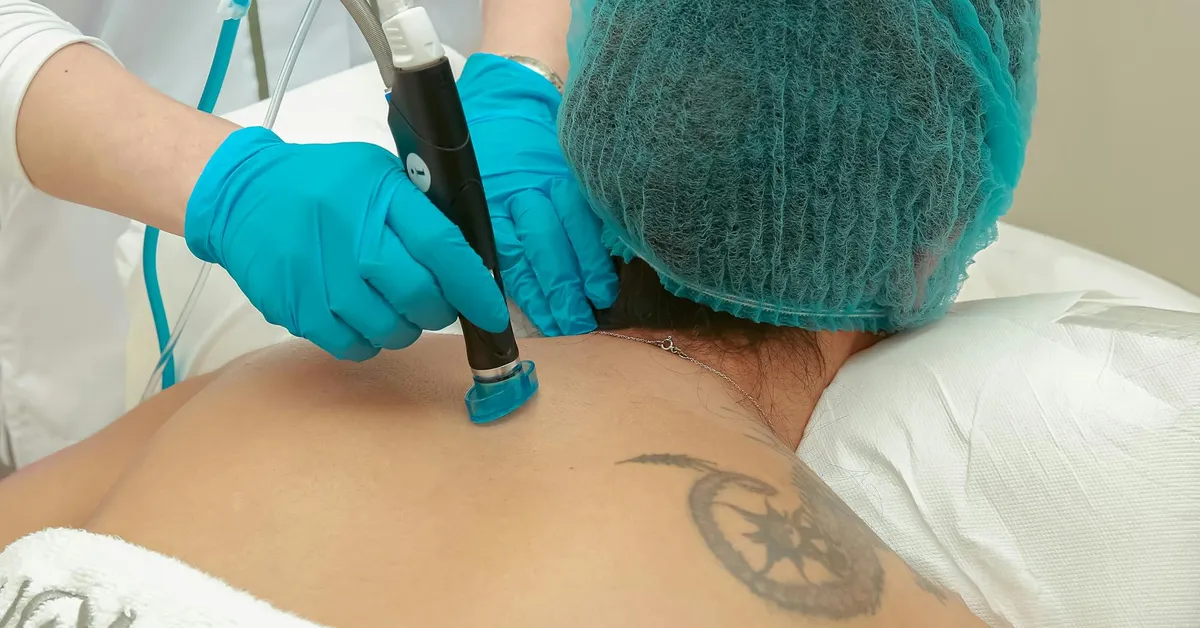
If you’re serious about removing a tattoo, follow these steps. This is the same guidance I give my clients and have followed myself. In the tattoo removal process explained, I’ll walk you through what happens at each stage. You’ll know what to expect during consultations, laser sessions, and aftercare.
- Schedule a Professional Consultation. This is your non-negotiable first step. Find a reputable clinic or technician with proven before-and-after photos of their work. They will assess your skin type, tattoo age, ink colors, and your overall health to create a realistic plan.
- Understand the Process and Commitment. Tattoo removal is a journey, not a single event. Laser removal typically requires 6-12 sessions spaced 6-8 weeks apart. Professional saline removal also requires multiple sessions. Be prepared for the timeline and the aftercare.
- Follow Aftercare Instructions Meticulously. Your technician will provide specific aftercare. This usually involves keeping the area clean, applying a recommended ointment, and avoiding sun exposure. Proper aftercare is what separates a good result from a problematic one.
- Be Patient and Trust the Process. Your body needs time to break down and eliminate the ink. You will see the most noticeable fading in the weeks following a session, not immediately after. Do not rush the process by scheduling sessions too close together.
Frequently Asked Questions
What are the risks of using salt for tattoo removal as discussed on Reddit?
On platforms like Reddit, users often share personal stories of severe pain, infections, and permanent scarring from DIY salt tattoo removal, but these anecdotes highlight the lack of medical oversight and the high likelihood of ineffective results, reinforcing why professionals strongly advise against this method due to its unsterile nature and potential for lifelong skin damage. These anecdotes underscore the broader dangers of home DIY tattoo removal. They also illustrate why people should seek professional, medically supervised options rather than attempting at-home methods.
Are there any benefits to DIY salt tattoo removal?
There are no legitimate benefits to using salt for tattoo removal; while it might seem cheap and private, it is completely ineffective at removing ink from the deeper skin layers and only leads to unnecessary risks like tissue damage and infection, making it a harmful alternative to proven professional treatments. People sometimes search for saline tattoo removal at home, but these DIY methods are not proven safe or effective and carry the same risks. Professional treatments remain the safer, evidence-based option.
Can salt tattoo removal increase the risk of cancer?
No direct link exists between salt tattoo removal and cancer, as salt itself isn’t a carcinogen; however, the method can cause chronic skin inflammation, scarring, and tissue damage, which in rare cases might contribute to abnormal cell changes over time, though the primary dangers remain infection and disfigurement rather than cancer.
Closing Words
Using salt to erase a tattoo is a recipe for pain, infection, and permanent scarring. This method is rooted in outdated folklore, not medical science, and it damages your skin without effectively breaking down the tattoo ink. I’ve seen the aftermath, and it’s never a faded tattoo-it’s a ruined canvas. If you’re researching this option, a saline tattoo removal guide explains the method and its process, and why it’s generally discouraged in favor of safer, evidence-based treatments. It also highlights the importance of consulting a licensed professional to discuss risks, reliability, and alternatives.
Your safest path forward is a consultation with a professional removal specialist. Modern laser technology is the only method proven to safely and effectively remove tattoo ink from your skin. Reputable tattoo removal clinics follow strict laser safety protocols to protect clients and staff. They perform skin assessments, may run a patch test, and provide eye protection and cooling during treatment. Protect your health and your skin’s future; leave this process to the experts.
Further Reading & Sources
- Saline Tattoo Removal vs Laser Tattoo Removal | Removery
- LiFT® Saline Tattoo Removal Solution | PMU Lightening
Ink Fade Lab is your trusted source for tattoo removal insights, combining expert knowledge with compassionate care to help you make informed decisions about your tattoo journey. Based on years of experience in the tattoo removal industry, we are dedicated to providing accurate, up-to-date information to support your choices.
Non-Laser Methods