
A Buyer’s Guide to Professional Tattoo Removal Machines
Published on: June 25, 2026 | Last Updated: June 25, 2026
Written By: Ashita no Joe
Are you feeling overwhelmed by the technical specs and bold promises in the world of tattoo removal equipment? I’ve been there, both as an artist removing my own tattoos and a professional helping clients, and I created this guide to cut through the noise.
This guide gives you the clear, practical knowledge you need to make a confident purchase. We will cover the different types of removal technology, key features that impact performance and safety, and a direct comparison of top professional models.
Quick Buyer’s Checklist for Tattoo Removal Machines
Before you invest a single dollar, run through this list. I’ve seen too many artists buy the wrong machine because they skipped these steps.
- Laser Type: Confirm it’s a true Q-switched or Picosecond system, not an IPL device masquerading as a laser.
- Wavelengths: The machine must offer at least 1064nm for dark inks and 532nm for reds and yellows. A 755nm wavelength for blues and greens is a major plus.
- Pulse Duration: Look for nanosecond (ns) or picosecond (ps) speeds. This is non-negotiable for effectively shattering ink particles.
- Fluence (Power): Higher joule output gives you more versatility for stubborn, dense tattoos and different skin types.
- Safety Features: Integrated skin contact sensors, key locks, and proper filtration for plume extraction are mandatory.
- Cost Elements: Factor in the price of the machine, handpiece, maintenance contracts, and consumables like lenses and calibration.
- Certifications: The device must be FDA-cleared and carry relevant medical device certifications for your region.
This checklist is your first line of defense against buying an expensive paperweight.
Understanding Professional Tattoo Removal Machines
What Defines a Professional-Grade Machine
A professional machine isn’t just a more expensive version of a consumer gadget. It’s an entirely different class of medical device built for performance, safety, and durability under constant clinical use. I’ve used machines on both ends of the spectrum, and the difference is night and day.
The core of a professional system is its laser source and its cooling. Consumer devices often use low-power diodes or intense pulsed light (IPL), which can’t generate the peak power needed to fragment tattoo ink effectively. A pro-grade Q-switched laser delivers immense energy in billionths of a second. This ultra-short, high-power pulse is the only proven way to break down tattoo ink without causing widespread thermal damage to the surrounding skin, unlike IPL treatment used in consumer devices.
Beyond the laser, professional use demands robust construction. We’re talking metal housings, reliable internal cooling systems to prevent overheating during long sessions, and handpieces designed for ergonomics and precision. Safety is engineered in, not tacked on. Features like skin contact sensors that prevent the laser from firing unless it’s flush with the skin are standard. I would never operate a machine without them.
Common Laser Types in Tattoo Removal
Not all lasers are created equal. The two workhorses in modern tattoo removal are Q-switched nanosecond lasers and the newer picosecond lasers. I’ve worked extensively with both. That’s where the best professional tattoo removal laser machines stand out—high reliability, efficient pigment breakup, and strong safety safeguards. In my experience, the top models balance speed, effectiveness, and patient comfort across a range of skin tones.
Q-switched lasers have been the industry standard for decades. They work by releasing energy in pulses measured in nanoseconds (billionths of a second). This is incredibly fast and effective for most tattoos. Picosecond lasers are the next evolution, firing pulses in trillionths of a second. The theory is that this even shorter pulse duration shatters ink particles more efficiently, potentially requiring fewer treatments. When choosing the best laser for tattoo removal, pico versus q-switched is a common consideration. Understanding the strengths and limits of each helps you decide which is best for your ink and skin. In my experience, pico lasers are fantastic, especially on stubborn inks, but a high-quality Q-switched machine is still a phenomenal and often more affordable tool.
The wavelength of the laser light determines which ink colors it can target. Here’s a simple breakdown:
| Laser Wavelength | Best For Targeting | Notes from the Trenches |
|---|---|---|
| 1064nm (Nd:YAG) | Black, Dark Blue, Dark Green | Your most-used setting. It penetrates deeply and is safer on darker skin tones. |
| 532nm (Frequency-Doubled Nd:YAG) | Red, Orange, Some Yellows | Very effective but requires more care as it can be absorbed by melanin. |
| 755nm (Alexandrite) | Blue, Green, Purple | A specialized wavelength that is exceptionally good at tackling these difficult colors. |
Choosing a machine with multiple wavelengths gives you the artistic freedom to tackle any tattoo that walks through your door. A device limited to just 1064nm will leave you powerless against a colorful sleeve.
How Tattoo Removal Technology Works
The Science of Breaking Down Ink
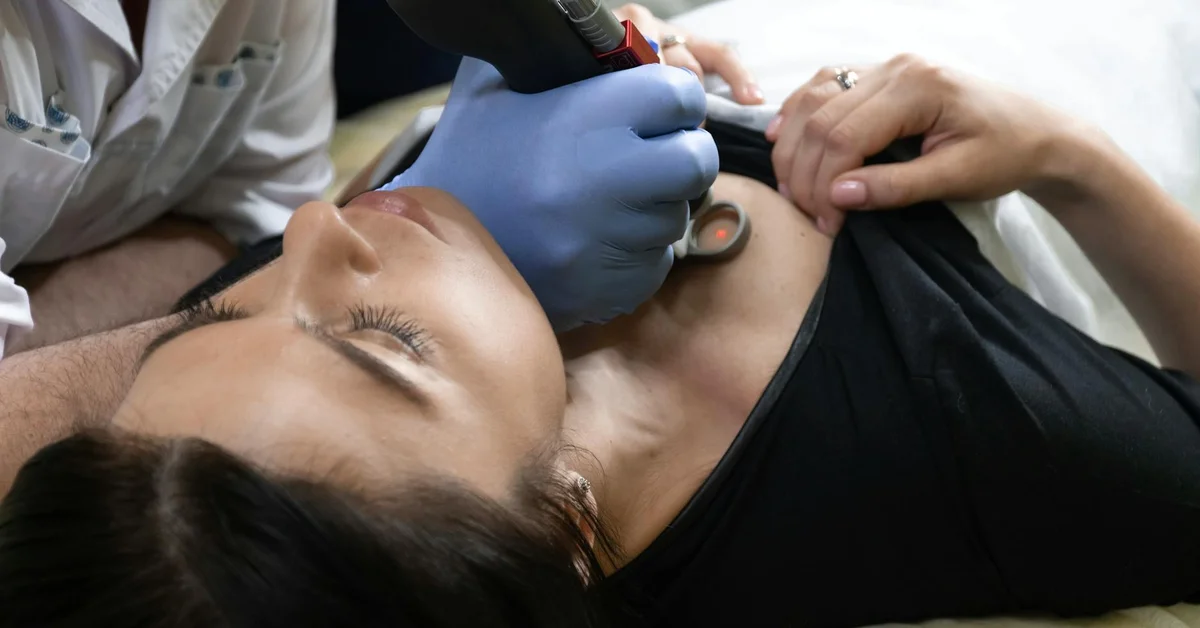
Think of tattoo ink particles as tiny, stubborn pebbles trapped under your skin. A professional removal laser works by firing a very specific, intensely focused beam of light that passes harmlessly through the top layers of skin. This light is tuned to a precise wavelength that gets eagerly absorbed by the tattoo pigment, causing the ink particles to violently vibrate and shatter into microscopic fragments. It’s like hitting a wine glass with the exact musical note that makes it resonate until it breaks. This is how laser tattoo removal works scientifically.
The pulse duration—the length of time the laser energy is delivered—is critical. Too long, and you cook the surrounding skin. Too short, and the ink doesn’t properly fracture. You need a pulse duration shorter than the skin’s thermal relaxation time to contain the heat and protect the tissue. Different skin tones require different settings because melanin competes with ink for the laser’s attention. On darker skin, I use longer wavelengths that bypass melanin to target the ink directly, minimizing the risk of hypopigmentation. Laser tattoo removal also helps address pigmentation issues like uneven discoloration caused by tattoos. By tailoring pulse duration and wavelength to spare melanin, clinicians can treat pigment while breaking down ink.
Key Technical Specifications Explained
Reading a machine’s spec sheet can feel like decoding another language. Let’s translate the most critical terms you need to understand.
- Fluence (Measured in Joules/cm²): This is the energy density. Think of it as the power setting. Higher fluence delivers more energy to break up stubborn ink, but must be carefully calibrated to the individual’s skin and tattoo.
- Spot Size (Measured in millimeters): The diameter of the laser beam. A larger spot size penetrates deeper into the skin, which is vital for reaching deep-seated ink. It also allows you to treat a larger area faster.
- Repetition Rate (Measured in Hertz – Hz): How many laser pulses the machine can fire per second. A higher rep rate speeds up treatment time, but you must never sacrifice precision for speed.
- Pulse Duration (Measured in nanoseconds): The length of the laser pulse. As I mentioned, this is key to safety. Ultra-short, Q-switched pulses are the gold standard for effectively fracturing ink without excessive heat damage.
Here is how I interpret these specs for an effective purchase:
- Prioritize a machine with a wide, adjustable fluence range to handle everything from delicate linework to dense tribal tattoos.
- Ensure the spot size options include at least a 4mm handpiece for effective depth penetration.
- Look for a repetition rate that balances efficiency with control-something in the 1-10 Hz range is typically more than sufficient.
- Confirm the machine uses true Q-switched technology for nanosecond-range pulse durations. This is non-negotiable for modern, safe removal.
Evaluating Safety and Compliance
Essential Safety Features
I learned the importance of cooling systems the hard way. Early in my career, I used a machine with a subpar cooling attachment on a client with a dense ankle tattoo. The result was a blister the size of a grape. Effective contact cooling, where the handpiece tip is chilled, is your first and most important line of defense against thermal injury. It protects the epidermis, reduces pain significantly, and allows you to use the appropriate fluence settings without burning the skin.
Beyond cooling, built-in safety protocols are what separate professional gear from dangerous toys. Look for features like a key lock to prevent unauthorized use, clear system-ready indicators, and mandatory skin contact sensors that prevent the laser from firing in the air. These features exist for a reason-to make the procedure idiot-proof and protect your client from permanent harm. A machine without robust safety features is a lawsuit waiting to happen.
Training, Certification, and Regulatory Marks
Owning a powerful laser without proper training is like giving a teenager a Ferrari and a learner’s permit. It’s a disaster in the making. Formal, hands-on training is not a suggestion; it’s the bedrock of safe and effective tattoo removal. I’ve seen technicians cause severe hypopigmentation and scarring simply because they didn’t understand how to adjust settings for different skin types. If you’re considering this as a career, a career guide for becoming a laser tattoo removal technician can map out the exact steps to training, certification, and building a compliant practice. It helps you identify accredited programs, gain supervised hands-on experience, and stay current with safety standards.
Regulatory marks are your assurance that a device meets basic safety and performance standards.
- FDA Clearance (USA): This means the device has been evaluated for safety and efficacy.
- CE Mark (Europe): Indicates conformity with health, safety, and environmental protection standards.
Do not purchase a machine that lacks these certifications. Here are the steps to verify everything is above board:
- Ask the manufacturer or distributor for a copy of the FDA clearance or CE certificate.
- Research the training program offered. It should be comprehensive, include hands-on practice, and be provided by certified professionals.
- Check the instructor’s credentials. They should have verifiable, extensive experience in laser tattoo removal.
- Understand that skipping proper training not only risks your clients’ safety but also exposes you to massive legal liability and potential revocation of your business license.
Cost Analysis and Return on Investment
Breaking Down the Total Cost
The sticker price on a removal machine is just the beginning. To understand the real investment, you must factor in all the associated costs that keep the business running.
- Initial Purchase: This is the big number for the laser unit itself.
- Maintenance Contracts: Most manufacturers require an annual service contract to keep warranties valid. This can cost thousands per year.
- Consumables: This includes laser handpieces (which have a finite lifespan), protective eyewear for you and the client, calibration tools, and cooling gels.
- Hidden Costs: Don’t forget shipping, installation, and potentially higher electrical costs for running the equipment.
Let’s compare your acquisition options:
| Option | Pros | Cons |
|---|---|---|
| Buying New | Full warranty, latest technology, included training. | Highest upfront cost. |
| Buying Used | Lower initial investment. | Possible hidden wear, expired warranty, may lack modern safety features. |
| Leasing | Preserves capital, often includes maintenance. | Higher total cost over time, you don’t own the asset. |
Calculating Your ROI
A cheaper machine can become the most expensive mistake you ever make. I’ve watched clinics lose clients and revenue because their budget laser produced poor results, leading to frustrated customers and endless sessions. Your ROI isn’t just about the machine’s cost; it’s about your ability to deliver clear, consistent results that build your reputation.
Follow this step-by-step approach to estimate your true payback period:
- Estimate Earnings Per Session: Determine your average price per session and estimate how many sessions you can realistically book per week.
- Calculate Gross Monthly Revenue: Multiply your sessions per week by your price and then by 4.3.
- Factor in Ongoing Expenses: Add up your monthly costs for loan/lease payments, maintenance, consumables, and rent.
- Determine Net Monthly Profit: Subtract your total monthly expenses from your gross monthly revenue.
- Calculate Payback Period: Divide the total initial investment by your net monthly profit. This gives you the number of months to break even.
A high-quality, reliable machine may have a higher price tag, but it pays for itself by ensuring client satisfaction, repeat business, and a flawless professional reputation. The “savings” from a bargain machine are often wiped out by repair costs, lost clients, and the inability to effectively remove challenging tattoos.
Where to Buy and What to Avoid
Finding Reliable Sources
Your machine’s source is as critical as the machine itself. I purchase my primary lasers directly from the manufacturer or their authorized distributors. This is the only way to guarantee you receive a genuine product with a valid, enforceable warranty.
Platforms like eBay or Amazon are minefields for professional equipment. I’ve seen too many colleagues get burned by “new” machines that are actually used, refurbished without disclosure, or outright counterfeits. These grey market units often have software in another language, non-standard power supplies, or missing safety features. A price that seems too good to be true is your first and biggest red flag.
Before you pay a single dollar, verify the warranty directly with the manufacturer’s head office. A seller offering their own “warranty” is a major warning sign; they often lack the parts and technical expertise for legitimate repairs.
Learning from User Reviews and Forums
Online communities like specific subreddits or professional forums are invaluable, but you must read them like a detective. Look for patterns, not single opinions. Ignore the hype and focus on long-term reports about durability and service support.
When assessing reviews, I ask myself these questions:
- Are multiple users reporting the same part failing after a similar amount of use?
- When someone had a problem, how did the company respond? Was support slow or helpful?
- Do the results described seem consistent and realistic, or do they sound like marketing copy?
Be deeply skeptical of claims that sound revolutionary or promise painless, scar-free results every time. Unverified, miraculous claims are usually a cover for an inferior product. Real-world performance involves nuance and varies with technique and client physiology.
Personal Insights and Best Practices
Lessons from Hands-On Experience
I learned the hard way that not all machines are built for a busy clinic. Early in my career, a budget-friendly laser I bought sputtered and died mid-way through a full-sleeve removal. The internal cooling system couldn’t handle the workload, and the repair cost nearly matched the original price. That single failure taught me more about machine quality than any sales brochure ever could.
The robust, clinical-grade machine I use now has features that have saved countless sessions. Its real-time skin temperature monitoring, for instance, prevents overheating on darker skin tones. These aren’t just fancy extras; they are essential tools for safe, effective treatment.
I cannot stress this enough: do not attempt DIY removal methods or use machines without proper, hands-on training. Home laser tattoo removal kits promise convenience, but they are not safe and are not reliably effective. I’ve treated the scars and burns from at-home removal attempts, and the damage is often permanent. Investing in certified training is non-negotiable for client safety and your professional reputation.
Final Recommendations for Different Scenarios
Your ideal machine depends entirely on your practice’s goals and clientele. Based on my experience removing tattoos from all skin types and colors, here is a straightforward guide. When we discuss the best overall method tattoo removal, we weigh efficacy, safety, and downtime across skin tones. This guide keeps that balance in focus.
- For Startup Clinics & Budget-Conscious Practices: A quality pre-owned Q-switched Nd:YAG laser from a reputable dealer. It’s the workhorse of the industry, effective on a wide range of ink colors and skin types. Verify its service history.
- For Practices Upgrading Their Capabilities: A dual-platform laser combining Q-switched and Picosecond technologies. This gives you the versatility to tackle stubborn blues and greens more effectively while still handling standard black ink.
- For Specialists Treating Diverse Skin Types: A modern Nd:YAG laser with advanced fractional attachment and integrated cooling. The longer wavelength is safer for melanin-rich skin, and fractional technology can help with ink fragmentation and textural issues.
- For High-Volume Practices Focusing on Black Ink: A powerful, air-cooled Q-switched laser with a fast repetition rate. This setup allows for quicker treatments and can handle a full day’s schedule without overheating.
Frequently Asked Questions
What is a professional tattoo removal machine?
A professional tattoo removal machine is a medical-grade device, such as a Q-switched or picosecond laser, built for clinical use with features like multiple wavelengths, high energy output, and integrated safety systems to effectively and safely break down tattoo ink across various skin types and colors.
Is there a tattoo removal machine on Amazon?
While Amazon may list some devices marketed for tattoo removal, they are typically low-power, consumer-grade tools like IPL machines that lack the power and safety features of professional equipment; it’s best to avoid these and source from authorized dealers to ensure FDA-cleared, reliable devices.
What is a Pico tattoo removal machine?
A Pico tattoo removal machine uses picosecond laser technology, delivering energy in ultra-short trillionth-of-a-second pulses to shatter ink particles more efficiently than traditional nanosecond lasers, potentially reducing the number of sessions needed for stubborn or colorful tattoos.
Closing Words
Your choice in a professional tattoo removal machine is a direct investment in your reputation and your clients’ safety. Prioritize devices from reputable manufacturers with proven track records and robust support systems. A cheap machine can become a very expensive mistake through poor results, client injuries, or constant repairs. In our tattoo removal machines equipment guide, you’ll find a practical framework for evaluating specs, safety features, and maintenance needs. Use it to compare models beyond price and brand.
Ultimately, the most advanced machine is only as effective as the artist operating it. Master the fundamentals of laser physics and skin interaction through certified training. Consider getting certified through laser tattoo removal training schools. A recognized certification signals you meet safety standards and best practices. I’ve learned from my own studio that consistent, safe results build the trust that turns a one-time removal client into a lifelong patron.
Further Reading & Sources
- Tattoo Removal Laser Machines | Best Tattoo Removal Lasers for Sale Online
- Advanced Laser Tattoo Removal Machines | Alma
Ink Fade Lab is your trusted source for tattoo removal insights, combining expert knowledge with compassionate care to help you make informed decisions about your tattoo journey. Based on years of experience in the tattoo removal industry, we are dedicated to providing accurate, up-to-date information to support your choices.
Professional Laser Machines