
What is Saline Tattoo Removal? A Complete Guide
Published on: December 18, 2025 | Last Updated: December 18, 2025
Written By: Ashita no Joe
Staring at a tattoo you wish you never got? You’re not alone, and that feeling of regret is something I’ve helped countless clients-and even myself-navigate.
This guide cuts through the confusion to explain the entire saline removal process from my firsthand experience. We will cover how the saline solution works, what to expect during and after a session, and how it compares to laser removal. Knowing your options is the first step toward taking back control of your skin.
What is Saline Tattoo Removal?
Saline tattoo removal is a non-laser method for extracting unwanted ink from the skin. It does not use light or heat energy to break up pigment. Instead, it relies on a specialized salt-based solution to pull ink out from within the skin layers.
The solution is not just table salt and water. It is a sterile, pH-balanced liquid often containing sodium chloride, distilled water, and sometimes other ingredients to soothe the skin. This chemical composition is fundamentally different from laser removal, which targets ink with intense light pulses. Saline removal works on a cellular level, not through photothermal destruction.
I remember my first real test with this method was on a client with a small, poorly done lip liner tattoo. She was terrified of lasers near her face. We agreed saline was the safer bet. Watching that dark pigment slowly rise to the surface and flake away over the following weeks was a revelation. It proved that effective removal didn’t always require a high-tech beam of light. That experience also piqued my interest in inkless alternatives—methods that fade or lift pigment without relying on lasers. From saline-based techniques to other non-laser options, there are gentler paths worth considering.
How Saline Tattoo Removal Works
The core mechanism is an osmotic process. Think of your skin cells as tiny, water-filled balloons. The highly concentrated saline solution creates an imbalance. Nature always seeks balance, so the salt-rich solution draws the ink-saturated fluid out of your skin cells. This is the “draw-out” effect in action.
Here is how the solution interacts with your tattoo and skin:
- A technician uses a tattoo machine or similar tool to implant the saline solution directly into the dermis, the same layer that holds the tattoo ink.
- The saline surrounds the ink particles and creates a high-salt environment.
- Your body’s own fluids, which contain the suspended ink, are naturally pulled toward this saline concentration.
- This mixture of saline, ink, and bodily fluids then rises to the skin’s surface, forming a light scab.
As that scab forms and eventually sheds, it takes the trapped ink particles with it. Imagine using a dry sponge to soak up a spill; the sponge (the saline) pulls the liquid (the ink) upward and away from the surface. Each session repeats this process, gradually lightening the tattoo with minimal trauma to the surrounding skin tissue. The goal is to let your body’s natural healing processes do the work of expulsion.
The Step-by-Step Saline Tattoo Removal Procedure
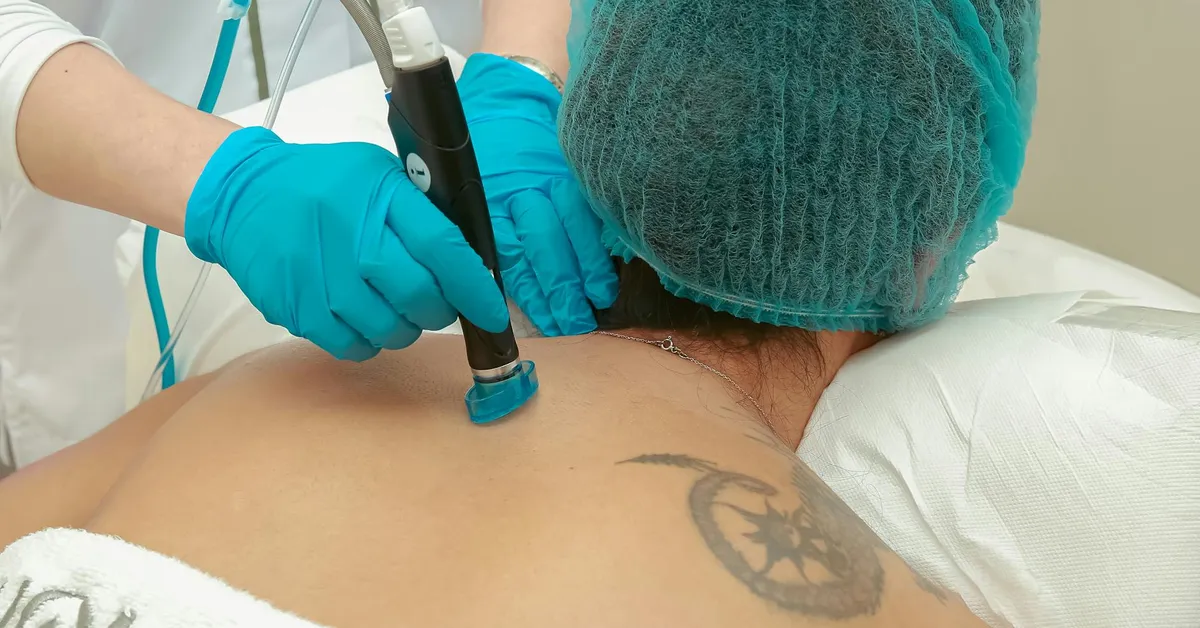
From my studio chair, I can tell you this process is methodical. It requires patience from both the artist and the client. Every successful removal starts with a transparent conversation about your skin and your goals. In our sessions, we outline the tattoo removal stages and what to expect at each step. That clarity helps you stay patient and prepared.
The Journey From Consultation to Clear Skin
The entire process is a partnership. I never start a removal on a first-time client. We need a plan.
- Initial Consultation: I assess your tattoo’s age, ink colors, and your skin type. We discuss your health history and I set realistic expectations. This is where I explain that saline removal is a gradual lightening, not an instant eraser.
- Patch Test: For new clients or sensitive skin, I perform a small, discrete test. This shows us how your skin will react before we commit to a larger area.
- Scheduling Sessions: We space appointments 6-8 weeks apart. Your skin needs this full cycle to heal and process the ink.
Inside a Typical Session
Here is what you will experience once you are in my chair for a session.
- Prepping the Skin: I thoroughly clean the area with an antiseptic. I do not shave the skin immediately before the procedure to avoid micro-cuts and irritation.
- The Application: Using a sterile tattoo machine with a single needle, I implant the saline solution directly into the dermis, following the tattoo’s lines. You will feel a sensation similar to being tattooed. The goal is to open the skin just enough for the solution to begin its work of drawing out the ink.
- Immediate Actions: After a brief period, I gently wipe the area. You will often see ink on the wipe-this is a good initial sign. I then apply a protective barrier and bandage the area securely.
Healing Time and Aftercare for Saline Removal
Healing from saline removal is more intense than healing a tattoo. Your aftercare discipline directly impacts your results and safety. Neglecting aftercare can lead to scarring, which is far more permanent than the tattoo you are trying to remove. During the saline removal healing process, a scabbing phase is common as the skin regenerates. Following professional aftercare guidance—gentle cleansing, avoiding picking, and protecting the area from irritation—helps minimize scabbing and reduce the risk of lasting marks.
The Healing Timeline
Your skin will go through distinct stages. Knowing what to expect prevents panic.
- Days 1-3: The area will be tender, red, and swollen. A small amount of plasma and ink may weep. This is normal.
- Days 4-10: A thin scab or crust will form. The most critical rule is to let this scab fall off naturally. Picking it pulls ink out prematurely and can cause scarring.
- Weeks 2-6: The scab sheds, revealing new, pink skin underneath. This skin is fragile. It will slowly return to its normal tone and texture over the following weeks.
Your Aftercare Checklist
Follow these steps religiously after every session.
- Keep the bandage on for the first few hours as directed.
- Gently wash the area with mild, fragrance-free soap and pat it dry.
- Apply a thin layer of recommended ointment to keep the area moist.
- Wear loose, breathable clothing over the treated area.
- Avoid submerging the area in pools, hot tubs, or baths.
- No sweating from intense exercise for at least 48-72 hours.
- Protect the healing skin from direct sun exposure indefinitely.
I learned the hard way with one of my own tattoos. I got lazy with aftercare and picked at a scab. That small moment of impatience left a faint textural change I can still feel today. Do not make my mistake.
Results and Effectiveness of Saline Tattoo Removal
Saline removal is not magic. It is a chemical and physical process with variable outcomes. Setting realistic expectations from day one is the key to client satisfaction.
What You Can Realistically Expect
You will not see a clean slate after one session. The goal is progressive lightening over multiple appointments. Most clients need 4-8 sessions for significant fading. The tattoo will appear softer, blurrier, and less saturated with each visit. Progress is cumulative, with steady improvement from session to session. We’ll review results at each appointment to plan the next session.
Factors That Dictate Your Outcome
Several elements influence how well and how quickly your tattoo will fade.
- Ink Type: Professional black and red inks typically respond best. Homemade or amateur tattoos can be unpredictable. I am always wary of white ink, as it can oxidize and turn darker.
- Tattoo Age: Older tattoos have often been broken down by the body’s immune system over time, making them sometimes easier to remove.
- Skin Tone: While generally safe for all skin tones, there is a risk of hyperpigmentation or hypopigmentation. I am extra cautious with darker skin, adjusting technique to minimize this risk.
I had a client with a decade-old black tribal tattoo. After five sessions, it was about 80% gone. Another client came to me with a dense, new tattoo packed with green ink; we saw only a 30% reduction after three sessions before switching strategies. Your mileage will vary, and an honest artist will tell you that upfront.
Saline vs. Laser Tattoo Removal Comparison
Choosing between saline and laser is one of the biggest decisions you’ll make. I’ve performed countless sessions of both in my studio, and they are fundamentally different tools for different jobs.
Direct Method Comparison
| Factor | Saline Removal | Laser Removal |
|---|---|---|
| Method | A concentrated salt solution is tattooed into the skin, pulling ink to the surface through osmosis. | High-intensity light beams shatter ink particles for the body’s immune system to remove. |
| Typical Cost Per Session | $150 – $450 | $200 – $500 |
| Downtime & Healing | 3-7 days of weeping and crusting, similar to a fresh tattoo. More visible process. | 1-3 days of redness and swelling, with possible blistering. Less surface disruption. |
Pros and Cons: A Practitioner’s View
Saline Removal Pros:
- Effective on a wider range of ink colors, including difficult whites and pastels.
- No risk of thermal damage or hypopigmentation from heat.
- Ideal for sensitive areas near eyes and lips.
- Excellent for lightening tattoos before a cover-up.
Saline Removal Cons:
- The healing process is messier and more involved.
- Can require more sessions than laser for complete removal.
- Not as effective on very deep, dense tattoos.
Laser Removal Pros:
- Gold standard for fast, efficient removal of standard black and dark ink.
- Less immediate aftercare than saline.
- Targets ink deep within the skin’s dermis.
Laser Removal Cons:
- Can be ineffective or risky on certain ink colors, causing discoloration.
- Carries a higher risk of burning, blistering, and skin texture changes.
- The “snap” of the laser is intensely painful for many.
I almost always steer clients toward saline for eyebrow tattoos, cosmetic work, or any tattoo with unknown pigment composition. I’ve seen too many laser sessions turn white ink gray or cause permanent skin lightening. Saline is a gentler, more predictable physical process.
Cost of Saline Tattoo Removal

Understanding the price breakdown helps you budget realistically and avoid sticker shock.
What Determines Your Final Bill
- Tattoo Size: This is the biggest factor. A small script line may be one flat fee, while a large back piece is priced by the square inch.
- Number of Sessions: Most tattoos need 3-8 sessions spaced 6-8 weeks apart. Older, faded tattoos often require fewer.
- Geographic Location: Studio rates in major cities are consistently higher than in rural areas.
- Artist Expertise: A seasoned removal specialist commands a higher price than a novice.
- Tattoo Location & Complexity: Difficult spots (like fingers) or ink packed with multiple colors can increase the time and cost per session.
Average Price Comparison
While prices vary wildly, here’s a general idea for a single session on a 3×3 inch tattoo:
- Saline Removal: $250 – $400
- Laser Removal: $300 – $500
- At-Home DIY Kit: $50 – $150 (I strongly advise against this, which I’ll explain next).
A professional uses medical-grade, sterile saline and has the technical skill to control depth and pressure. They know how to read your skin’s response during the procedure. This is a medical-grade cosmetic procedure, not a craft project. Your skin deserves the expertise and safety of a licensed, experienced specialist. I would never attempt to remove one of my own tattoos with a DIY method, and I would never recommend you do either. For more delicate cases, it’s especially important to choose a specialist experienced in sensitive skin care.
Questions I Get Asked
What is the difference between saline tattoo removal and laser?
While both aim to remove ink, their methods are fundamentally different. Laser removal uses high-intensity light pulses to shatter ink particles deep within the skin, which your body then flushes away. In contrast, saline removal is a non-laser, osmotic process where a salt solution is tattooed into the skin to actively draw the ink up and out to the surface, where it scabs and flakes away, making it a gentler option for sensitive areas and a wider range of ink colors.
What is the aftercare for saline tattoo removal?
Proper aftercare is critical to prevent scarring and ensure good results. Immediately after a session, you’ll need to keep the area bandaged and clean it gently with mild soap. It’s essential to let the resulting scab form and fall off naturally, which can take over a week, and to avoid picking at it. You must also protect the healing skin from sun exposure and avoid submerging it in water or engaging in activities that cause heavy sweating for several days.
What is the cost of saline tattoo removal?
The cost of saline removal varies based on the tattoo’s size, colors, and location, as well as the practitioner’s expertise. On average, a single session can range from $150 to $450. Since most tattoos require multiple sessions spaced several weeks apart for significant fading, the total investment is something to budget for, but it is often comparable to the cost of laser removal for similar-sized work.
Closing Words
Saline removal is a precise, gentle tool for lightening or erasing tattoos, especially on delicate skin or for cosmetic pigment correction. It works by drawing ink out through the skin’s surface over a series of sessions. While the process demands patience, the reduced risk of scarring or hypopigmentation makes it a powerful alternative to laser for many situations. In the broader landscape of noninvasive tattoo removal techniques, saline-based methods emphasize gentleness and precise control. They offer a lower-risk option for areas where skin sensitivity matters or where preserving texture is important.
Always trust this meticulous procedure to a seasoned professional who specializes in this specific method. In this tattoo removal process explained guide, we break down the steps and what to expect. Understanding each phase helps you make an informed decision about treatment. Attempting any form of removal yourself risks permanent damage that is far more difficult to fix than the original tattoo. For the right candidate, saline tattoo removal is a reliable path to clearer skin.
Further Reading & Sources
- Saline Tattoo Removal vs Laser Tattoo Removal | Removery
- r/microblading on Reddit: Question: How is saline removal done? One session in and confused / have questions!
Ink Fade Lab is your trusted source for tattoo removal insights, combining expert knowledge with compassionate care to help you make informed decisions about your tattoo journey. Based on years of experience in the tattoo removal industry, we are dedicated to providing accurate, up-to-date information to support your choices.
Non-Laser Methods